Framing, in the vast universe of photography, is much more than simply choosing the edges of an image; it is the fundamental decision that defines how the world is perceived and presented to the viewer. Among the many facets of framing, two stand out as central pillars: horizontal framing and vertical framing. Each, with its own particularities, evokes distinct sensations and narratives, profoundly influencing the interpretation of the work. This article will explore these two types of framing in depth, breaking down their characteristics, applications, and how iconic photographers throughout history have employed them to create unforgettable masterpieces.
Horizontal Perspective: Width, Landscape, and Extended Narrative
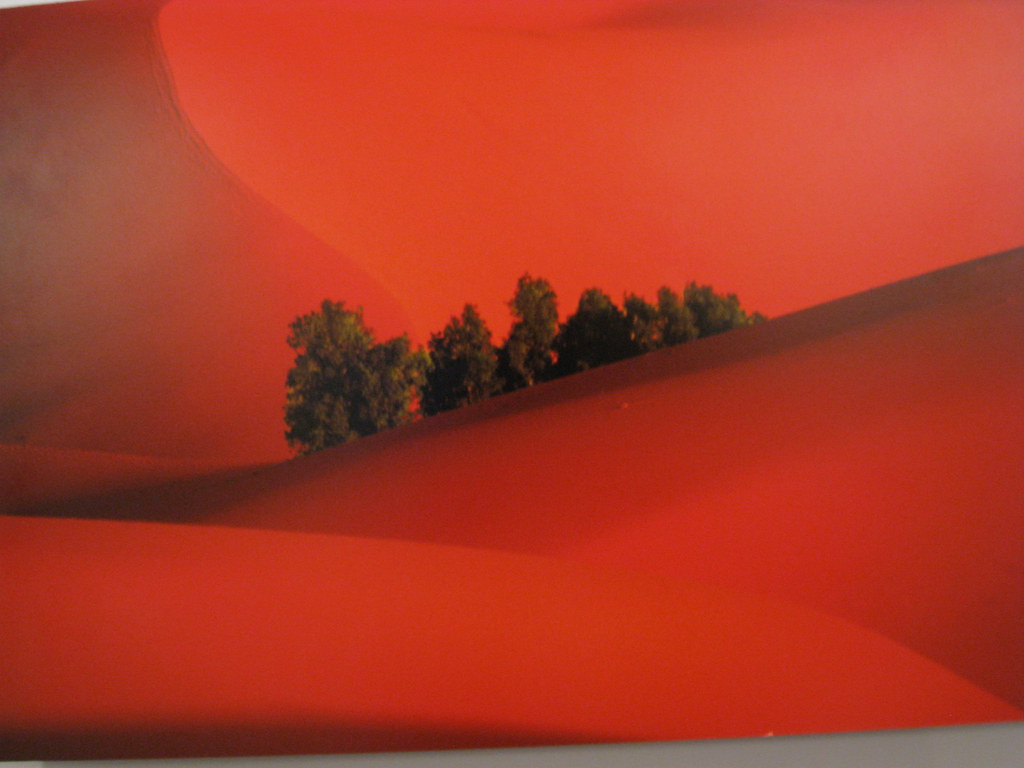
Franco Fontana
The horizontal frame, also known as «landscape» due to its natural association with capturing vast expanses, is undoubtedly the most common and, for many, the most intuitive format. Its predominance in photography and film is no coincidence; it aligns with the way the human eye perceives the world, which naturally stretches from side to side.
Features and Effects of Horizontal Framing:
- Sense of Amplitude and Space: The most obvious characteristic of horizontal framing is its ability to convey a sense of spaciousness and expansion. It allows for a wider field of view, making it ideal for capturing landscapes, group scenes, or any situation where you want to emphasize the expanse of the surroundings.
- Sequential Narrative and Flow: The horizontal layout encourages reading the image from left to right, or vice versa, which can guide the viewer’s eye through a sequence of elements. This makes it an excellent format for storytelling, as it allows the narrative to develop throughout the frame.
- Stability and Calm: Horizontality is intrinsically associated with the horizon line, a symbol of stability and balance. Horizontal images tend to convey a sense of calm, rest, and tranquility.
- Naturalness in Human Perception: Our eyes are arranged horizontally on our face, and our field of vision is naturally wider than it is tall. This makes horizontal framing intrinsically more «comfortable» and familiar to our visual perception.
Typical Applications of Horizontal Framing:
- Landscape Photography: This is the quintessential format for capturing the majesty of nature: mountains, oceans, deserts, open skies. It allows you to capture the grandeur of the setting and immerse the viewer in the environment.
- Urban and Architectural Photography: To show the expanse of a city, the horizon line of a skyline, or the façade of a building that stretches across its width.
- Group and Event Scenes: Ideal for including multiple people in a shot without cutting anyone out, or for documenting an event where interaction between multiple subjects is key.
- Documentary Photography: When you need to contextualize a situation, show the environment in which an action takes place, or capture a broad scene that contains multiple informative elements.
- Panoramas: Although panoramas are an extreme form of horizontal framing, their existence underscores the effectiveness of this format in capturing an exceptionally wide field of view.
Ansel Adams (1902-1984): The Master of Horizontal Nature
Ansel Adams is perhaps the epitome of the photographer who mastered the horizontal frame to capture the magnificence of American landscapes. His iconic black and white photographs of Yosemite National Park and other natural sites are a testament to the power of this format to evoke awe and reverence. Adams used horizontal framing to emphasize the immensity of the mountains, the vastness of the valleys, and the serenity of the lakes. His meticulously planned compositions often included horizontal lines that guided the eye through the landscape, creating a sense of depth and scale.
«Moonrise, Hernandez, New Mexico» (1941). Although not a pure landscape in the traditional sense, this photograph uses horizontal framing to capture a vast sky and the moon rising over a small town. The vastness of the sky contrasts with the tiny presence of the human settlement, creating a powerful composition that encompasses both the celestial and the terrestrial.

Stephen Shore: The Aesthetics of the Everyday in Horizontal
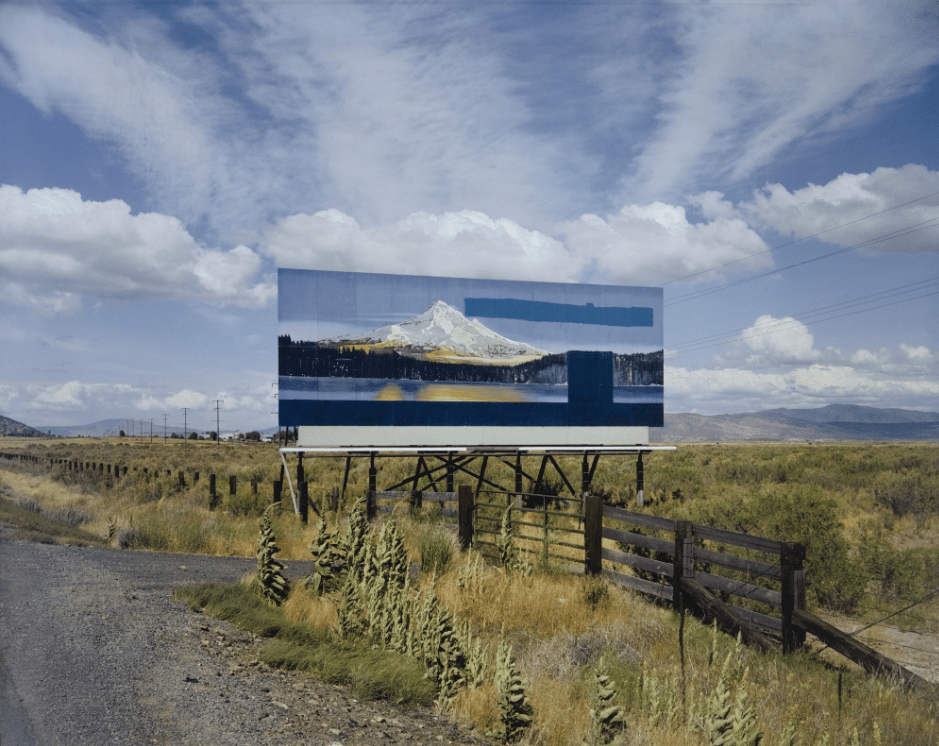
Shore, a key figure in color photography and the «New Topography,» often used horizontal framing to document the vernacular American landscape. His photographs of small towns, highways, and banal interiors, though at first glance simple, reveal a keen observation of everyday life. Horizontal framing allowed him to capture the expanse of these environments, the arrangement of objects, and the overall atmosphere of the place.
Key example: «U.S. 97, South of Klamath Falls, Oregon» (1973). This highway photograph is a classic example of Shore’s use of horizontal framing. The highway stretches into the distance, and the lines of the fields and mountains form a background that emphasizes the expansiveness of the landscape. The horizontality here not only describes the space but also conveys a sense of travel and the vastness of America.
Vertical Perspective: Intimacy, Portraiture, and Elevation
Vertical framing, often referred to as «portrait» due to its predominant use in this genre, offers a completely different perspective. By rotating the camera 90 degrees, the image takes on a more restrained, focused, and often dramatic quality.

Characteristics and Effects of Vertical Framing:
- Emphasis on Height and Depth: Vertical framing is ideal for highlighting the height of objects, whether people, trees, buildings, or structures. It directs the viewer’s gaze from bottom to top or vice versa, creating a sense of vertical elevation or depth.
- Intimacy and Focus on the Subject: By limiting the horizontal field of view, vertical framing forces the viewer to focus on the main subject. This can create a sense of intimacy and a more direct connection with what is being photographed.
- Strength and Dynamism: Vertical lines are associated with strength, growth, and direction. A vertical composition can convey a sense of dynamism, tension, or solemnity.
- Isolation and Uniqueness: By cropping the surroundings from the side, vertical framing can isolate the subject from its context, emphasizing its individuality and uniqueness.
Typical Applications of Vertical Framing:
- Portrait Photography: This is the quintessential format for individual portraits. It allows you to focus attention on the subject’s face, expressions, and body language, capturing their essence.
- Architecture and Tall Buildings: Ideal for highlighting the height and majesty of skyscrapers, bell towers, columns, or any structure that extends vertically.
- Trees and Tall Vegetation: To capture the slenderness of a tree, the density of a forest, or the verticality of a waterfall.
- Narrow Streets and Alleys: To emphasize claustrophobia or the perspective of a narrow passage.
- Isolated Elements and Minimalist Compositions: When you want to focus attention on a single object or a specific detail, eliminating distractions.
- Rising or Falling Narrative: Can be used to guide the eye along a vertical path, such as a staircase, a column, or a rising or falling figure.
Richard Avedon (1923-2004): The Essence of Vertical Portraiture
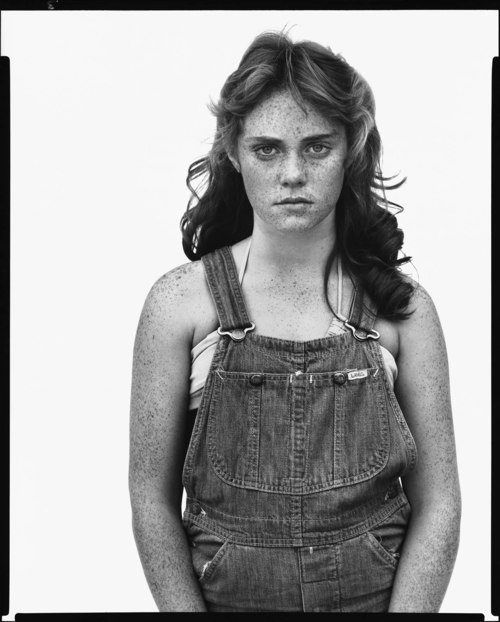
Richard Avedon was an undisputed master of portraiture, and vertical framing was one of his most powerful tools. His minimalist portraits, often against a white background, stripped the subject of any distractions, forcing the viewer to confront the sitter’s personality and expression. The vertical format reinforced this intimacy and the sense that the subject filled the space.
Key example: «Marilyn Monroe, Actress, New York City» (1957). Although there are multiple iconic Avedon portraits, this one of Marilyn Monroe is particularly revealing. The vertical framing, free of distractions, focuses attention on Monroe’s face and her complex expression, revealing a vulnerability that contrasts with her public image. The verticality accentuates her figure and the presence she occupies in the frame.
Dorothea Lange (1895-1965): Humanity Vertically
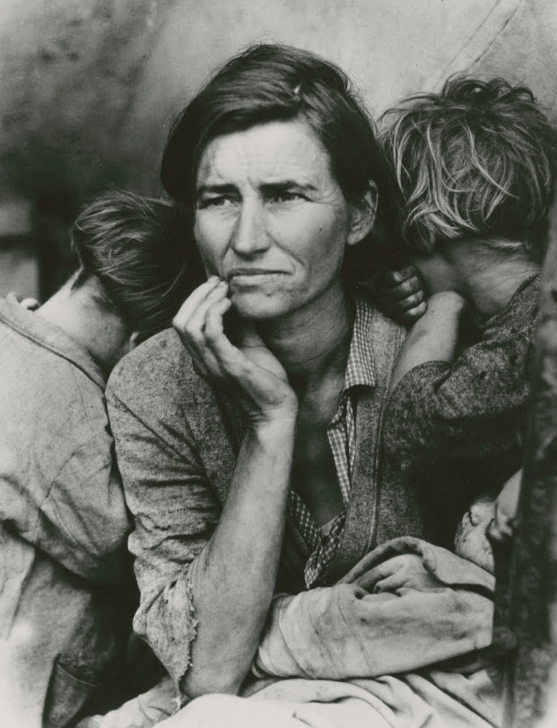
Dorothea Lange, a crucial figure in documentary photography and the Great Depression, used vertical framing with profound sensitivity to capture the dignity and suffering of migrant workers. Although her images often included the environment, her primary focus was the human figure, and the vertical format allowed her to emphasize the individual presence and emotionality of her subjects.
Key example: «Migrant Mother, Nipomo, California» (1936). This is perhaps one of the most famous photographs in history. Lange’s vertical framing focuses attention on Florence Owens Thompson and her children. The vertical composition emphasizes the figure of the mother, her gaze, and the way she holds her children, conveying a deep sense of concern and resilience. The vertical framing intensifies the emotional connection with the subject.
Framing Choice: Beyond the Rule, Toward Intention
The choice between horizontal and vertical framing is not arbitrary; it is a conscious decision that shapes the perception of the image and the narrative you wish to convey. There is no strict «rule» as to when to use one or the other, as each situation and creative intention demands careful consideration.
- Horizontal for Broad and Contextual: If the goal is to show a vast environment, capture a dynamic scene with multiple interacting elements, or convey a sense of calm and stability, horizontal framing is the most logical choice. It allows the viewer’s eye to wander and discover details throughout the image, creating a richer, more spatial narrative.

Steve Mc Curry

Ernst Haas
- Vertical for Intimate and Focus: If the priority is to isolate a subject, emphasize its height, create a sense of intimacy or drama, or direct the viewer’s gaze toward a specific focal point, vertical framing is the most effective tool. Limit distractions and focus attention on the essence of the subject.
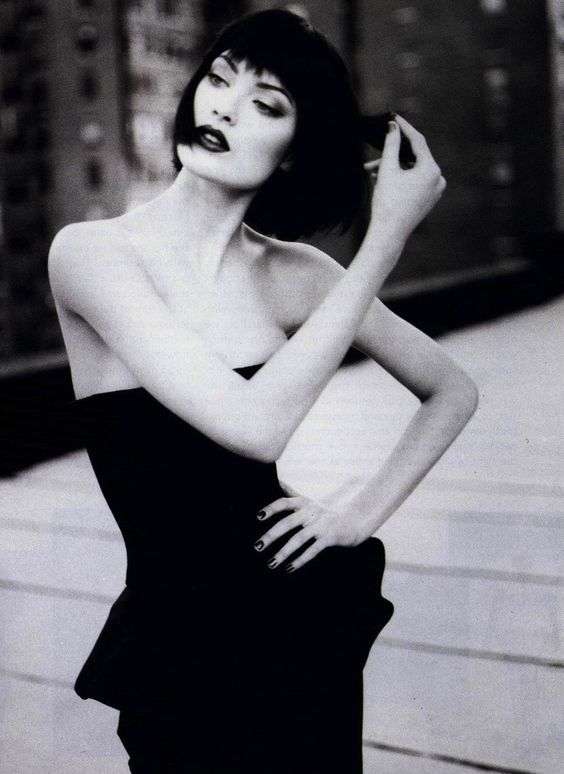
Patrick Demarchelier
Factors to Consider When Choosing a Frame:
- The Main Subject: Is the subject tall and slender (a tree, a person) or wide and expansive (a landscape, a group of people)?
- The Message or Emotion: Are you seeking spaciousness and tranquility, or intimacy and drama?
- The Dominant Lines: Are there horizontal lines (horizon, buildings) or vertical lines (trees, poles) that can be emphasized by the frame?4.
- The Composition: How are the elements distributed within the frame? Does the chosen frame enhance the arrangement and balance?
- The Context: Is it important to include the surrounding environment, or is it better to isolate the subject?
Beyond the Basics: The Power of Breaking the Rules
It’s critical to understand that while there are conventions for framing, the most innovative photographers have often achieved impact by challenging these expectations. A vertical landscape or horizontal portrait can be surprisingly effective if used with clear intention and strong composition.
Vertical Landscapes: A landscape can be photographed vertically to emphasize the height of rock formations, the tumbling of a waterfall, or the majesty of a solitary tree. An example might be an image of a giant sequoia stretching toward the sky, where the verticality enhances its impressive height.
Horizontal Portraits: A portrait can be horizontal to include part of the subject’s surroundings, contextualizing them or showing their interaction with the space. This is common in reportage photography, where the environment is as important as the subject. Consider a portrait of an artist in their studio, where the space and tools are integral to their identity.
Horizontal framing and vertical framing are two fundamental dialects in the vast language of photography. Each offers a unique perspective, dictating how the viewer interacts with the image and the story being told. From the majesty of Ansel Adams’s landscapes to the intimacy of Richard Avedon’s portraits, renowned photographers have demonstrated the inherent power of these two framing options.
Understanding their characteristics, effects, and applications is not just a technical matter; it is an immersion in the psychology of visual perception and narrative. By mastering the choice of framing, photographers not only capture reality, but interpret, shape, and present it in a way that resonates deeply with the eye and mind of the observer. Ultimately, the decision between horizontal and vertical is one of the first and most crucial a photographer makes, a decision that defines the soul and purpose of every image created. It is in this choice that the art of seeing becomes the art of showing.
 Camara Work
Deja un comentario