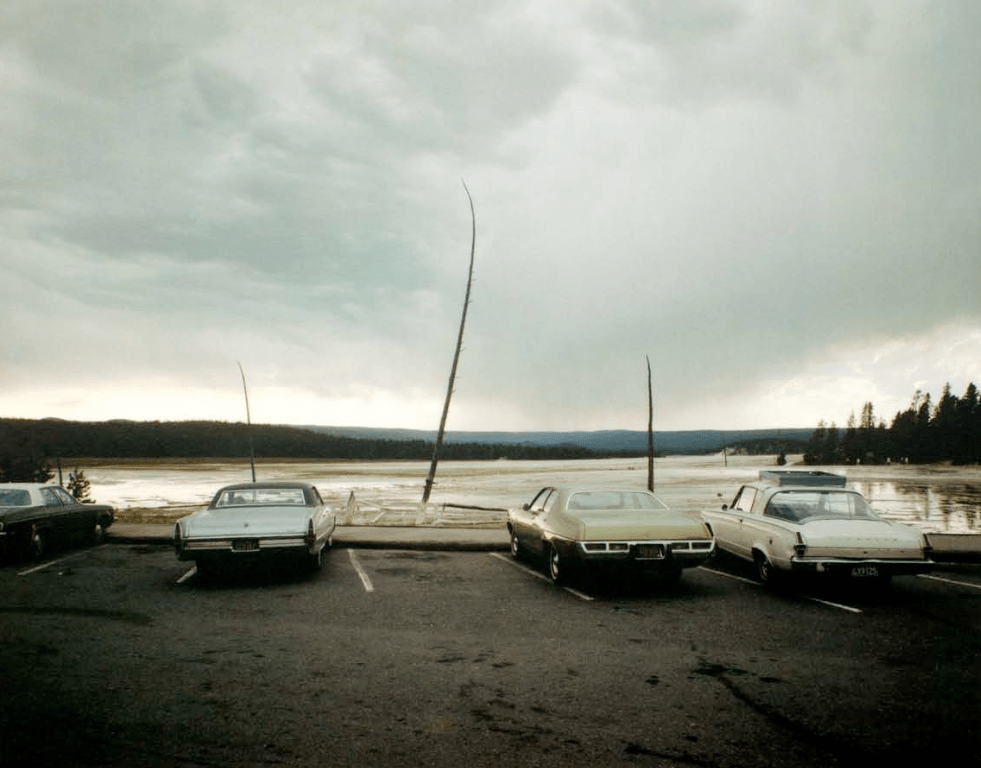
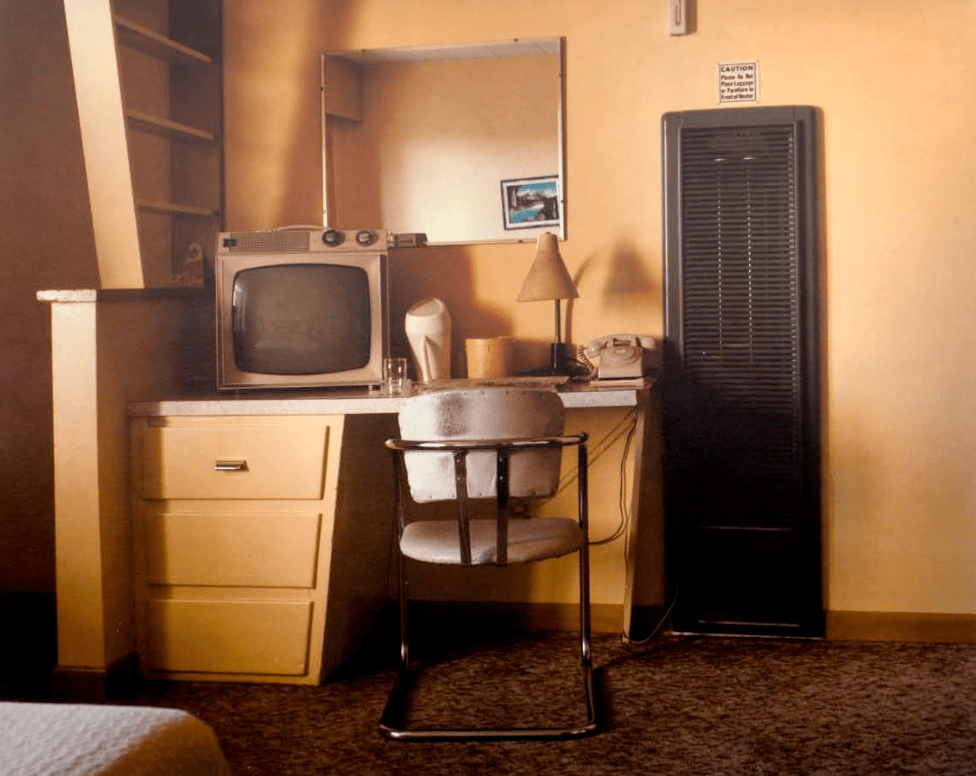
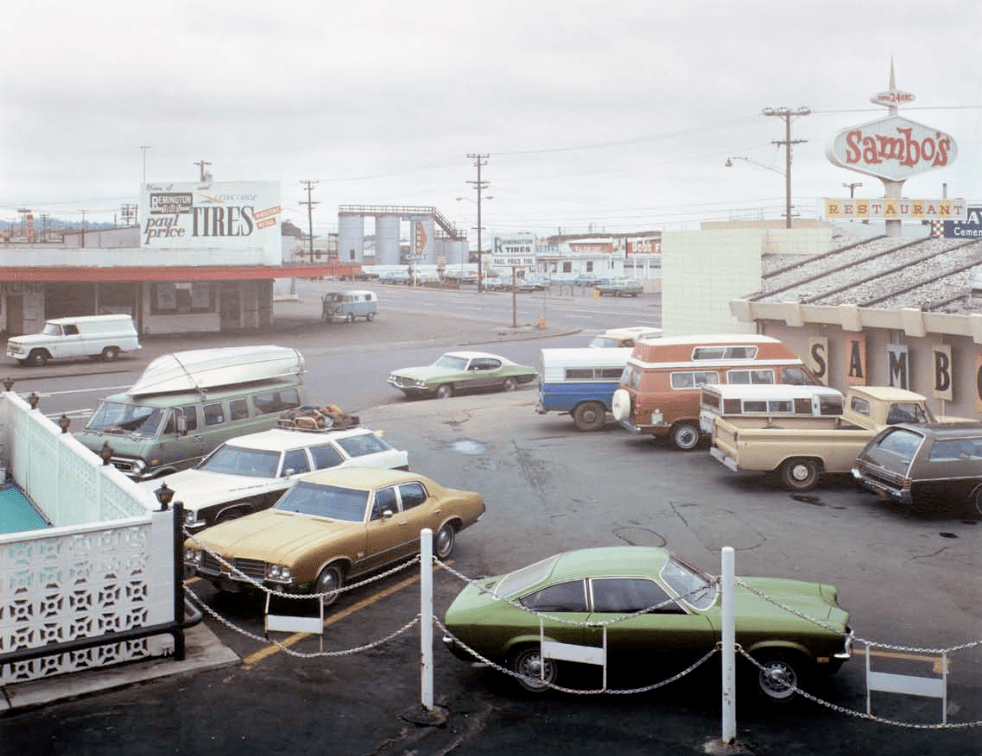
Between 1973 and 1981, Stephen Shore traveled across the United States by car, armed with a large-format camera (8×10 inches) and a keen sensitivity for the seemingly irrelevant. His destinations weren’t tourist spots or monumental landscapes. They were ordinary street corners, motel rooms, or empty parking lots. He was interested in what would normally go unnoticed: what is «off-screen» in the country’s collective imagination. In Uncommon Places, color is not a decorative addition: it is an essential part of the language. Shore uses no filters or dramatic effects; his palette is faithful to the natural light, often harsh and frontal, typical of midday.
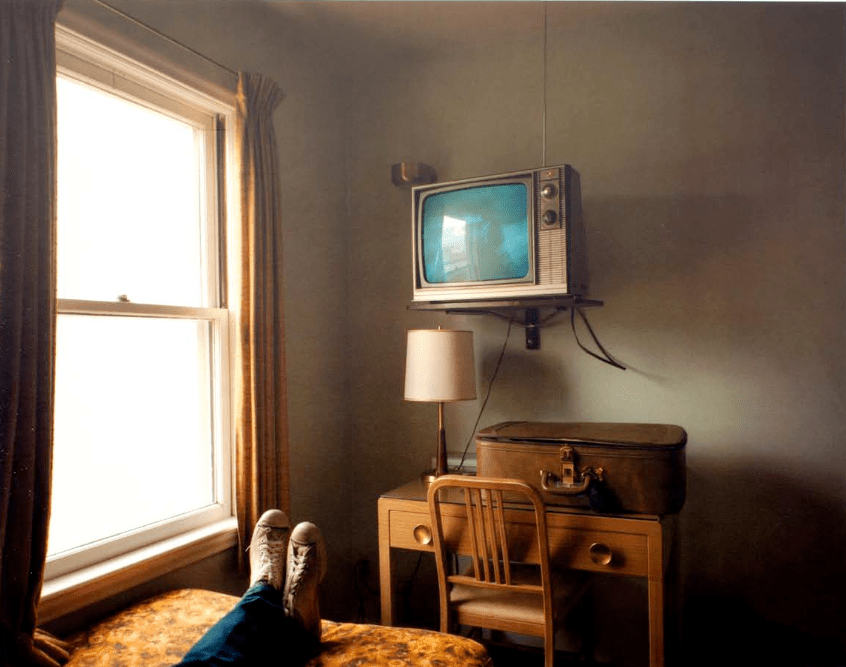
The large-format camera, with its overwhelming level of detail, reinforces this impression. There is no visual hierarchy: a cable, a stain on the ground, or a crack in the pavement receives as much attention as a building or a person. The extreme depth of field brings everything into focus, forcing the viewer to look closely, scanning the image with the same slowness with which Shore captured it.
Stephen Shore became a pioneer in his artistic use of color photography, challenging the predominance of black and white photography in the art scene of the time. Black and white dominated prestigious galleries and publications, associated with the «great documentary photography» of figures such as Walker Evans, Robert Frank, and Diane Arbus. Color, on the other hand, was relegated to the commercial realm: advertising, magazines, and postcards.
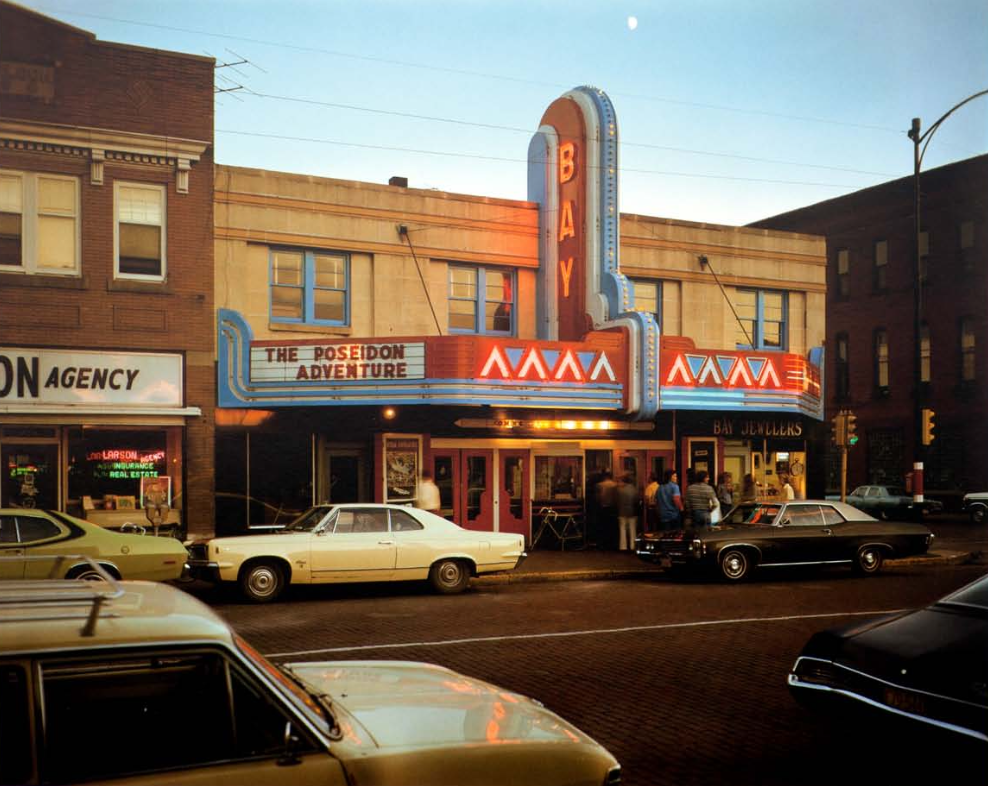
«Uncommon Places» stood out not only for its innovative technique and focus on the mundane, but also for its influence on subsequent generations of photographers. Shore not only documented physical landscapes, but also explored the emotional and cultural landscape of the United States at a time of social and economic change.
The series has been widely exhibited in museums and galleries, and the books compiling these photographs are considered works of art in themselves, showing how photography can capture beauty in the simple and everyday.
Stephen Shore is recognized as one of the most important pioneers in color photography, particularly for his monumental «Uncommon Places» series. This work challenged established conventions by elevating the ordinary to the extraordinary through its meticulous approach and innovative use of color.

What distinguishes «Uncommon Places» is the precision and detail with which Shore approaches his compositions. Each image is carefully composed, capturing not only the light and color vibrantly, but also the texture and unique character of each place. This technical rigor is combined with a focus on banality, transforming commonplace objects and scenes into subjects worthy of artistic contemplation.
The «Uncommon Places» series not only established Shore as a master of color photography, but also significantly influenced subsequent generations of photographers, inspiring them to explore new ways of storytelling through urban and landscape photography.
Stephen Shore’s «Uncommon Places» not only redefines the boundaries of color photography, but also invites viewers to reconsider the beauty and depth in the seemingly ordinary. Through his work, Shore reminds us that every corner of the world has a story to tell, and that photography, with its power of observation and reflection, can reveal these stories in a unique and powerful way.

«Uncommon Places» is today considered one of the most influential photographic series of the 20th century. The series has been exhibited in prestigious museums, and the book has gone through several editions since its first publication in 1982, constantly being reissued and expanded, reflecting its relevance and timeliness.
This work went from being a disruptive proposal to becoming a milestone in photographic art. Its impact lies in having forever changed the way we look at and value the contemporary landscape. Thanks to Shore, we learned that the ordinary can also be extraordinary, if observed closely enough.
Uncommon Places is part of the movement known as «New Topographics,» which emerged in the 1970s as a critical response to the idealization of landscape in traditional photography. Instead of majestic mountains or splendid fields, these photographers depicted housing estates, highways, and gas stations: landscapes constructed by and for humans. In this sense, Shore shares affinities with artists such as Lewis Baltz, Robert Adams, and Bernd and Hilla Becher.
But what distinguishes Shore is his tone. There’s no denunciation, but neither is there nostalgia. His images are, rather, open. They don’t tell us what to think. They invite us to look.
Uncommon Places is more than a collection of images. It’s a statement about how to look at the world. In a culture that values the spectacular and the exceptional, Shore teaches us that the everyday also deserves our attention. That an empty intersection in Texas or a car wash in Montana can be as revealing as a classic work of art, if we learn to look carefully, with time, with respect.
In this commitment to the simple and the direct, Shore not only renews the visual language of his time. He also offers us an ethics of seeing: a way of being in the world.


 Camara Work
Deja un comentario